

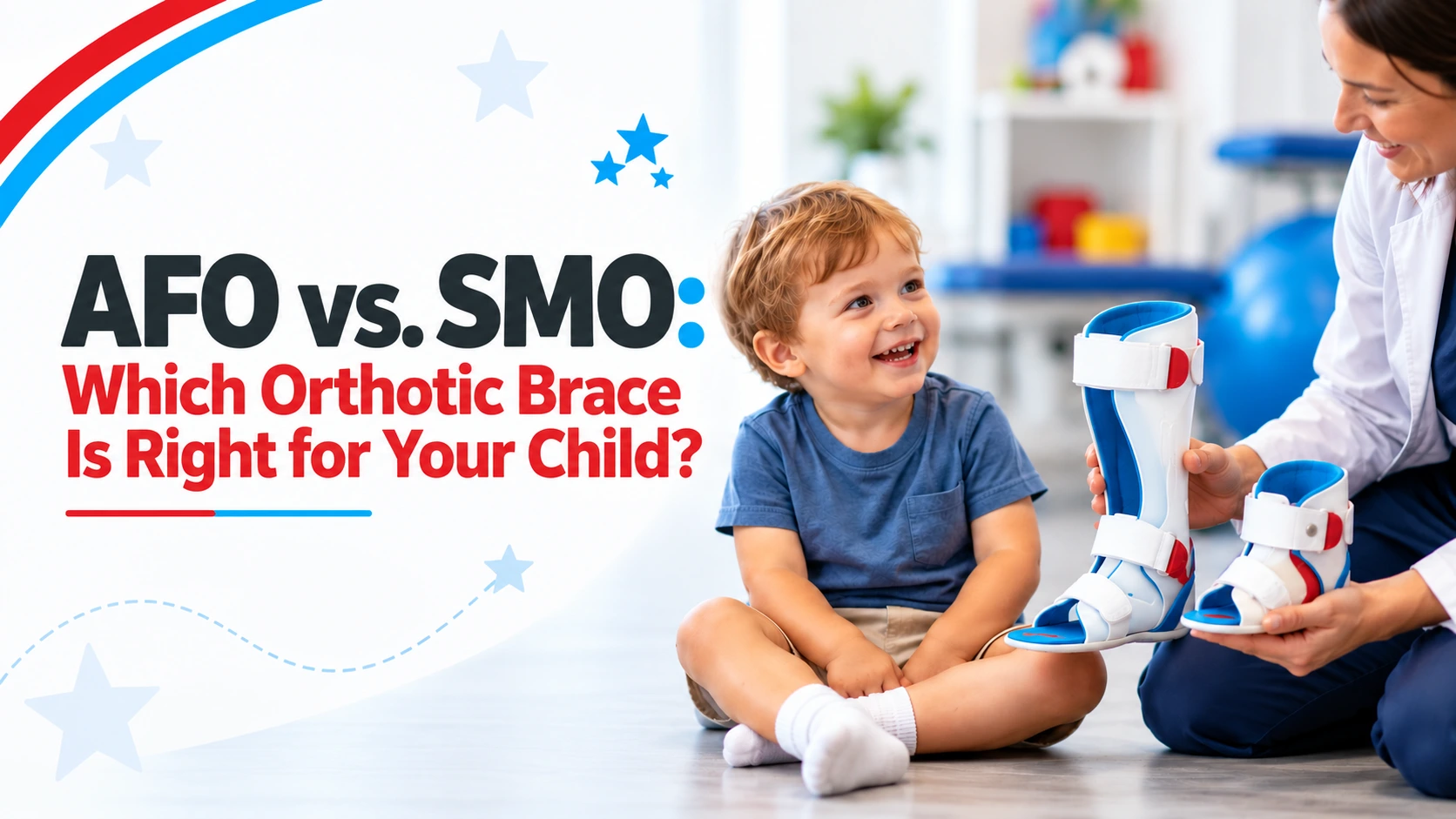
Hearing the terms AFO and SMO at an appointment can leave parents with more questions than answers. The short version of AFO vs. SMO: an ankle-foot orthosis (AFO) extends further up the lower leg and can steer or restrict how the ankle moves, whereas a supramalleolar orthosis (SMO) ends just over the ankle bones and concentrates on foot alignment and steadiness.
Neither brace is better across the board. The right choice depends on your child’s body, how they move, and what their care team hopes to achieve. GOAL Pediatrics created this guide to help you prepare good questions.
AFO vs. SMO: Understanding the Key Difference
The most visible difference is height. An AFO covers the foot, ankle and lower leg, usually finishing just below the knee. An SMO covers the foot and extends only slightly past the ankle. “Supra” means above, and the malleoli are the bony bumps on each side of the ankle.
Because an AFO includes the lower leg, it can influence ankle position and, depending on the design, how much the ankle is allowed to bend. An SMO mainly addresses how the foot and ankle line up, and many designs leave the ankle free to move up and down.
Designs vary: some AFOs are firmer, some SMOs add features, and more coverage does not mean better.
What Is an AFO Brace?
An ankle-foot orthosis, or AFO, is a custom-made brace that supports a child’s foot and ankle. Pediatric hospitals describe it as a device that covers the foot, ankle and lower leg, ending just under the knee.
How an AFO Typically Supports the Foot and Ankle
AFOs steady the ankle, guide how the foot moves, back up weak muscles or loose joints, and make walking easier. Some also help the toes clear the floor, or keep a joint positioned so the muscles around it stay long.
Styles range from rigid, solid AFOs that hold the ankle nearly still to hinged and flexible designs that permit more motion.
When Might a Clinician Consider an AFO?
Clinicians may consider an AFO for a child with weak muscles, an unstable joint or high muscle tone, or to protect a healing area after surgery. AFOs are also used for neuromuscular conditions such as cerebral palsy.
These are situations, not a checklist. Many children with them use other support, or none; an evaluation decides. GOAL’s pediatric bracing page notes its specialists evaluate a child before recommending treatment.
What Are SMO Braces?
A supramalleolar orthosis, or SMO, is a shorter custom brace that wraps the foot and rises just above the ankle bones. Children’s hospitals note that SMOs support the foot and ankle while leaving a child free to move.
How an SMO Typically Supports Foot Alignment
SMOs are designed to support how the foot and ankle line up, especially from side to side. For a child whose foot rolls inward (pronation) or whose ankle feels wobbly, an SMO may add stability. A standard SMO generally is not meant to control up-and-down ankle motion, although some designs add features for that purpose.
When Might a Clinician Consider an SMO?
An SMO may be considered when foot and ankle needs are mild to moderate, for example very flexible joints (hypermobility) or pronation. It can also be one stage in a longer plan: GOAL’s article on two-in-one orthotic options for younger children describes setups in which an SMO fits inside an AFO for added support, with the AFO removed later.
An SMO is a different tool, not a lesser or greater one, and it is not the answer for every child with flat-looking feet.
SMO vs. AFO: Key Differences at a Glance
| Feature | AFO | SMO |
|---|---|---|
| Full name | Ankle-foot orthosis | Supramalleolar orthosis |
| Typical coverage | Foot, ankle and lower leg, ending below the knee | Foot and ankle, ending just above the ankle bones |
| Support focus | Ankle and foot position | Foot alignment and side-to-side stability |
| Ankle movement control | Firm to flexible, depending on style | Often mostly free; some designs add features |
| What a clinician may assess | Muscle strength and tone, ankle control, balance | Foot posture, joint flexibility, stability, balance |
| Fitting and follow-up | Custom fit and regular checks as the child grows | Custom fit and regular checks as the child grows |
Use this table as a conversation starter. Not every design matches every row.
AFO vs. SMO Brace: Which May Be Suitable for Your Child?
Clinicians do not pick the “stronger” option. They start with the child. When comparing SMO vs. AFO orthotics, a care team may look at:
- Foot and ankle alignment
- Movement patterns and ankle control
- Balance and stability
- Muscle control and relevant medical history
- Comfort, footwear and daily activities
- Clinical goals and how often follow-up will be needed
Research on children with cerebral palsy shows how individual this is: which orthosis helps, if any, depends on the child’s walking pattern and needs.
That is why it is unwise to choose a brace from an online comparison, including this one. Your child’s doctor, therapist and orthotist can assess your child and talk through the options.
Comfort, Footwear, and Everyday Use
Getting the Fit Right
A few habits matter most: press the heel all the way back into the brace, put a sock underneath, and look at your child’s skin after each wearing for red spots or irritation. Never trim, heat or reshape a brace yourself, and keep to the wear schedule your team set.
Finding Suitable Shoes
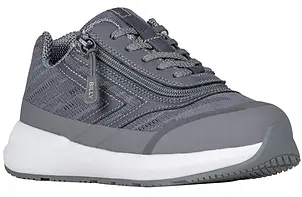
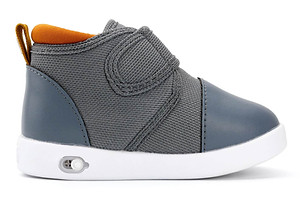
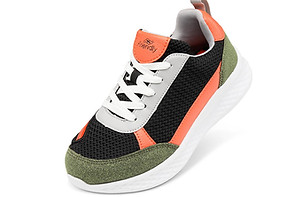
Shoes matter because the brace has to fit inside them. Some styles are built with extra room for braces, and it helps to ask your child’s team before buying. Wide openings and long straps can make getting a foot and brace into a shoe easier.
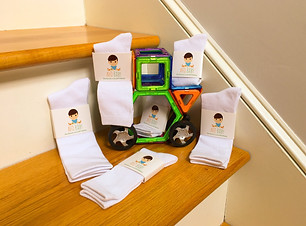
GOAL’s shoe and sock options for AFOs and SMOs and its article on shoes for AFOs and SMOs are good starting points; check fit with your orthotist.
Monitoring Comfort and Follow-Up
Children grow quickly, so fit can change. Contact your orthotics team about persistent discomfort, skin irritation, pressure areas or a changed fit. Regular follow-ups let the team update the plan.
Questions Parents Can Ask at an Orthotics Appointment
- What support does my child need, and what are we aiming for?
- Why this type of orthosis over other options?
- How much will this design limit or allow ankle movement?
- What should we expect at fitting, and how should we follow wear instructions?
- What signs of discomfort or skin irritation should we watch for?
- When is follow-up, and might the plan change as my child grows?
These questions help you take part in the conversation. They do not replace your clinician’s guidance.
Frequently Asked Questions About AFO vs. SMO
What is the main difference between an AFO and an SMO?
Coverage and type of support: an AFO reaches up to just below the knee and can guide ankle movement, while an SMO stops above the ankle and focuses on alignment and stability.
Are SMO braces better than AFOs?
No. Neither is better overall; the choice rests on an individual assessment.
Can children walk while wearing AFOs or SMOs?
Both are designed for standing and walking, usually inside shoes, and many children wear them for play and daily activities. Ask your team how to build up wearing time.
Does every child with flat feet need SMOs?
No. Flat-looking feet alone do not mean a brace is needed. A clinician looks at how the feet move, how steady they are and how your child functions day to day.
Can SMOs be used for children who toe-walk?
Some clinicians use certain SMO designs within a toe-walking plan, but toe walking has different causes and an SMO is not right for every child who does it. An evaluation should come first.
How long might a child need an orthotic brace?
There is no single answer. It depends on the child’s needs, growth and goals, and plans are reviewed over time.
How can parents find out which brace may be suitable?
Start with your child’s doctor or therapist, then arrange an orthotics evaluation. That evaluation, not an online guide, is how a care team decides.
Learn More About Pediatric Orthotics at GOAL Pediatrics
In short, the AFO vs. SMO question comes down to coverage and support, and which fits a child, if either, depends on that child.
To talk through your own child’s needs, learn more about GOAL Pediatrics’ pediatric orthotics services or find GOAL Pediatrics locations across Utah, Arizona, Texas and Idaho. Bring your questions; a conversation is a good place to start.

One Response