
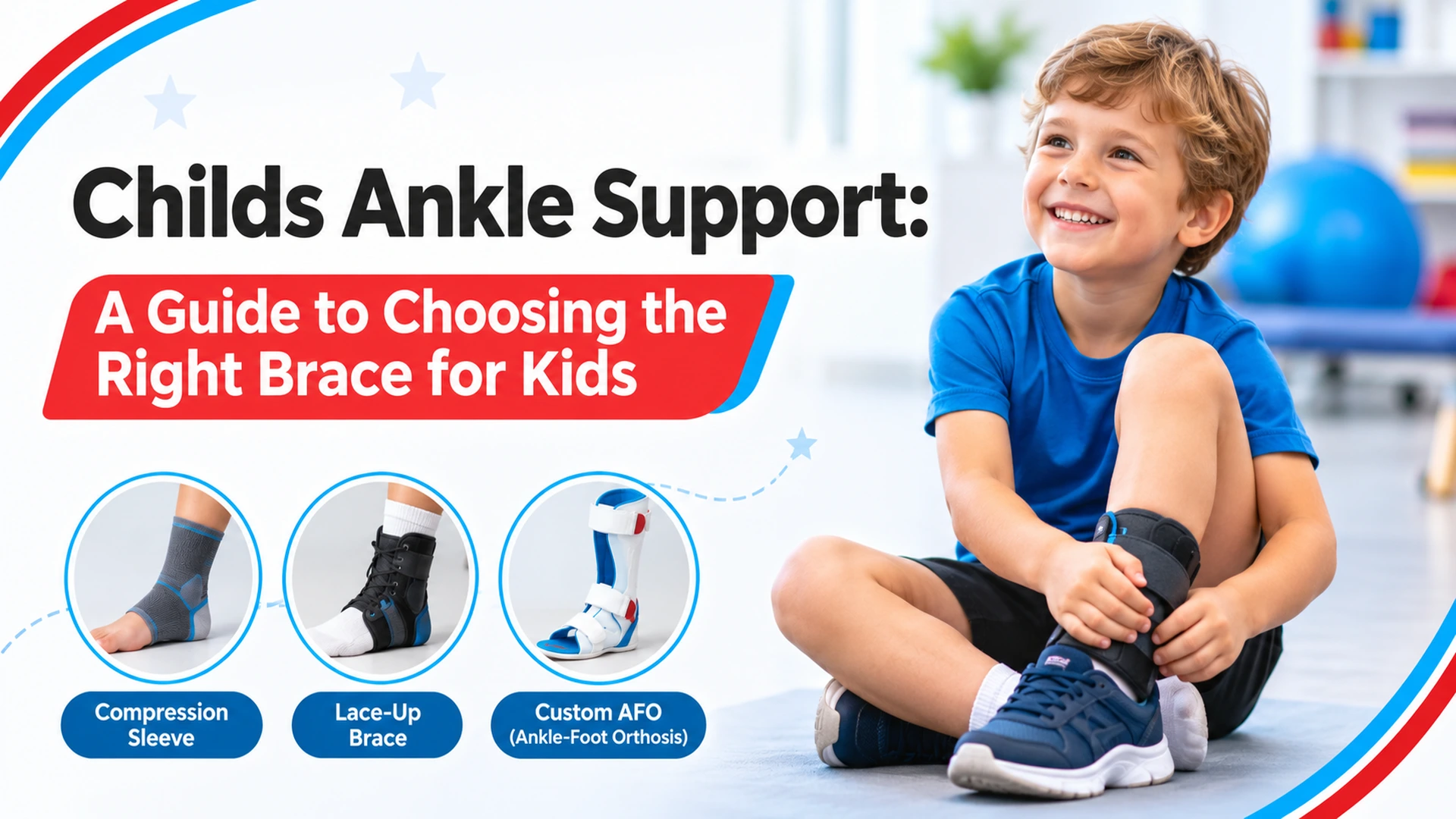
The right childs ankle support depends on why your child needs it, their age, and what they do all day. A soft compression sleeve, a lace-up brace, or a figure-8 strap can add stability in some sports and recovery situations. Children with ongoing mobility needs may instead be evaluated for a custom ankle-foot orthosis (AFO). Because a painful, swollen ankle in a child can be a growth plate fracture rather than a simple sprain, a new injury should be checked by a clinician before you buy any brace.
This guide walks through the main types of kids ankle support, how to choose by age and activity, how to measure and fit one, common mistakes, and when to call a doctor. It also explains how a store-bought brace differs from a custom pediatric AFO, because the two are not interchangeable.
Why Might Your Child Need Ankle Support?
Children need ankle support for different reasons: a recent injury, repeated rolling of the ankle, a sport with lots of cutting and jumping, or a longer-term difference in how the foot and ankle work. The reason matters more than the product name, because it decides what kind of support is appropriate.
Common Causes of Ankle Injuries in Children
Most pediatric ankle injuries come from a twist or roll during running, jumping, or landing on an uneven surface. Playground falls, trampolines, soccer, basketball, gymnastics, and dance are frequent settings. Children also have growth plates, softer areas of developing bone near the ends of bones. Mayo Clinic notes that ligaments are often stronger than these growth plates, so children are more likely to fracture than to sprain.
Signs Your Child May Need Ankle Support
These signs are worth raising with a clinician:
- The ankle rolls or “gives way” more than once
- Swelling or soreness returns after activity
- Your child avoids running or jumping because the ankle feels unsteady
- A recent sprain has been assessed and a clinician has suggested support during recovery
Support may be one part of a plan. Strengthening, balance work, and good footwear often matter just as much.
How Active Sports Can Affect Children’s Ankles
Youth sports put repeated stress on growing joints. Quick direction changes, jump landings, and uneven fields raise the chance of a roll-over injury. Warming up and wearing shoes that suit the sport are commonly recommended for reducing sprain risk, and Royal Children’s Hospital Melbourne suggests asking a GP or physiotherapist about braces or tape for children with ongoing or recurring ankle problems.
What Are the Different Types of Childs Ankle Support?
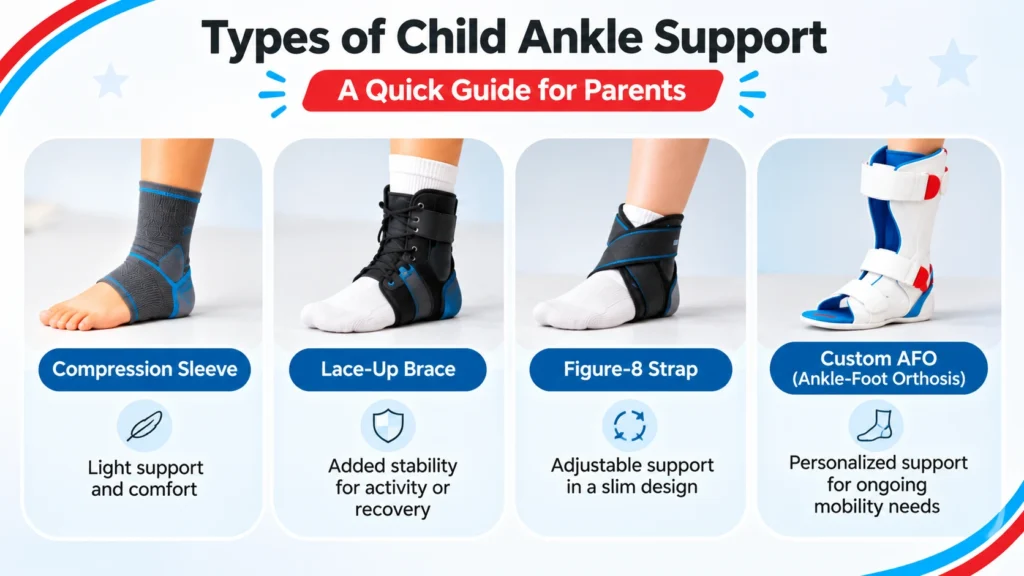
Children’s ankle supports range from soft sleeves to rigid braces. Each type offers a different level of support, and none is right for every child. The table below is a general overview, not a recommendation for your child.
| Type | General purpose | Level of support | Typical considerations | May suit, depending on clinical needs |
|---|---|---|---|---|
| Compression sleeve | Warmth, light compression, awareness of the joint |
Light |
Slips on easily; does not limit movement much | Mild soreness or a child who wants a gentle reminder to protect the ankle |
| Lace-up brace | Adjustable stability around the ankle |
Moderate |
Needs a good shoe fit and correct lacing | Sports use or recovery when a clinician has suggested added stability |
| Figure-8 strap | Strap that wraps the ankle and foot in a figure-8 pattern |
Light to moderate |
Can shift if worn loosely; sizing varies by brand | Active children who need a slim, easy-to-wear option |
| Hinged or rigid brace | Limits side-to-side motion more firmly |
Moderate to firm |
Bulkier; often used under clinical guidance | Moderate injuries or instability, as directed by a clinician |
| Pediatric brace for toddlers and infants | Small-scale support designed for young feet |
Varies |
Rarely needed without a clinician’s input | Specific developmental or orthopedic needs identified by a clinician |
| Custom pediatric AFO | Made from your child’s measurements for a specific mobility need |
Varies by design |
Requires an evaluation, fitting, and follow-up | Children with ongoing walking or stability needs, not routine sprains |
Compression Ankle Sleeves
A compression sleeve is a stretchy, sock-like support. It offers light compression and can feel reassuring, but it does not restrict motion much. It is not a substitute for assessment after a significant injury.
Lace-Up Ankle Braces
Lace-up braces let you adjust snugness. They tend to be used for sports or recovery when added stability is wanted. Fit matters: too loose and it shifts, too tight and it irritates skin or affects circulation.
Figure-8 Strap Ankle Supports
Figure-8 supports wrap around the ankle and foot in a looping pattern. They are slim enough to fit in many athletic shoes. Check that the straps stay in place without digging in.
Hinged and Rigid Ankle Braces
Hinged or rigid designs limit more motion and are usually chosen with clinical guidance. They can feel bulky for young children and are rarely the starting point for a mild problem.
Pediatric Ankle Braces for Toddlers and Infants
An infant ankle brace or toddler ankle brace is not a standard purchase. Babies and toddlers are still developing foot and leg alignment, and what looks like a problem is often part of normal growth. If you are worried about how your young child stands or walks, ask your pediatrician for an evaluation rather than choosing a brace yourself.
General Ankle Brace vs. Custom Pediatric AFO: What’s the Difference?
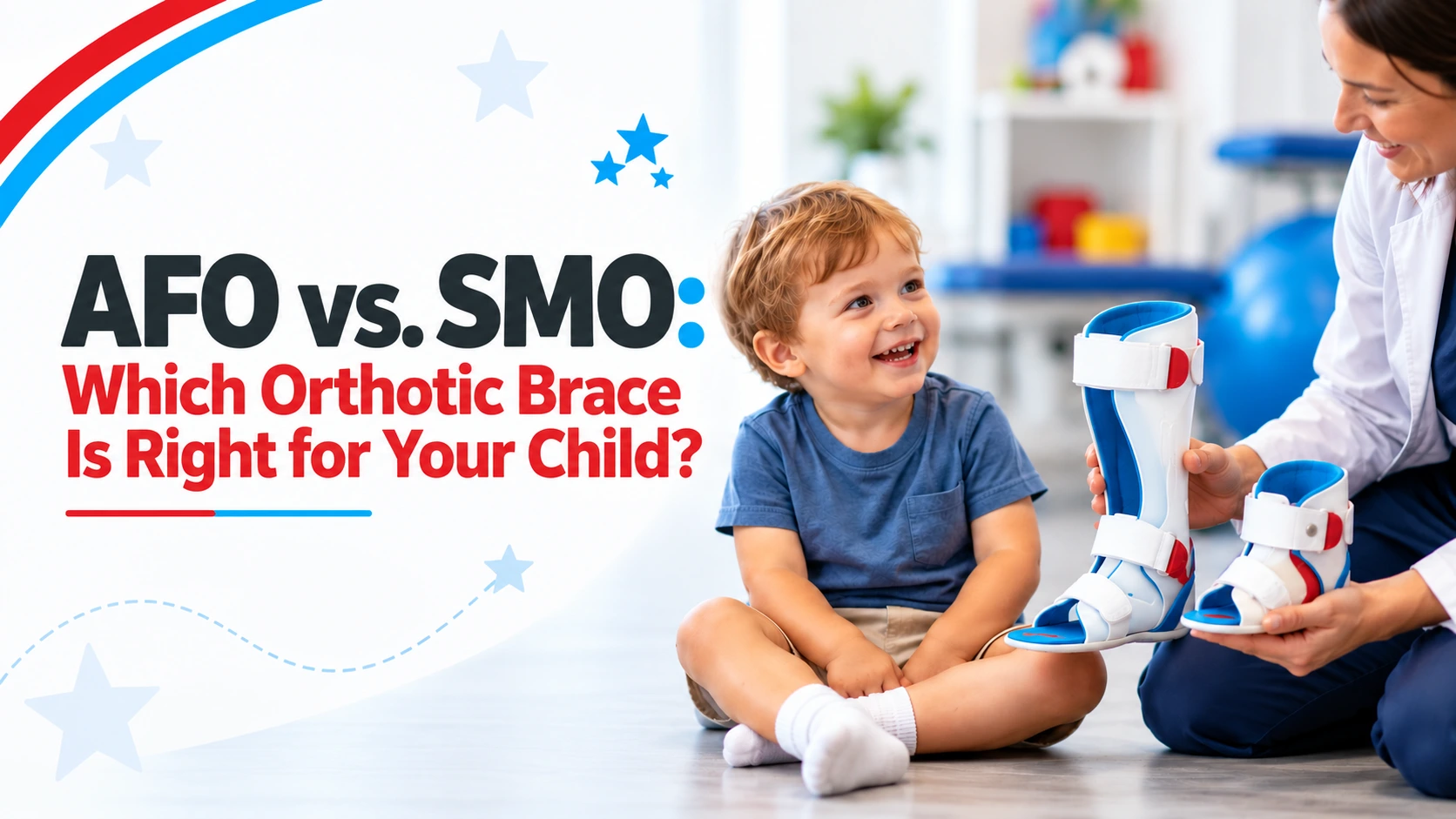
A general ankle brace is an off-the-shelf product, usually sold in sizes, designed to add stability to a healthy ankle or support one during recovery. A custom pediatric ankle-foot orthosis (AFO) is a brace made for one child after an evaluation, designed around a specific mobility or stability need.
An AFO is an orthosis that extends from below the knee down to the foot. Its job is to support walking and positioning of the foot and ankle in children with conditions that affect how they move. A supramalleolar orthosis (SMO) is a shorter relative that ends just above the ankle bones. You can read more in GOAL’s guide to AFO vs. SMO braces for kids.
Not every child with a sprained or sore ankle needs an AFO, and a custom device should not be pursued unless an evaluation shows a reason. Pediatric orthotic specialists often start with the least restrictive option that meets the child’s needs, because over-bracing can create its own problems.
How to Choose the Best Ankle Support for Your Child
The best ankle support for a child is the least restrictive option that meets their needs, fits well, and that your child will actually wear. A clinician’s input should come first if the ankle was injured or your child has ongoing symptoms.
Consider Your Child’s Age and Foot Size
Kids grow quickly, so a size that fits in spring may not fit by fall. Use the manufacturer’s sizing chart for children, not adult sizes, and recheck fit regularly.
Choose the Right Support Level
More support is not automatically better. A rigid brace used when only light support is needed can feel uncomfortable and discourage use. Too little support after a significant injury may leave the ankle unprotected. A clinician can help match the level to the situation.
Look for Comfortable and Breathable Materials
Children are more likely to wear a brace that does not itch, rub, or trap heat. Look for breathable fabrics, soft edges, and seams that do not press on bony areas. Check the skin after each wear, especially in the first week.
Check Adjustability and Ease of Use
If your child is old enough to put the brace on themselves, simple straps or laces help build independence. For younger children, choose something you can fasten the same way every time.
Consider Your Child’s Daily Activities and Sports
A brace for gym class is not the same as one worn all day at school. Think about shoes, how long it will be worn, and whether the sport requires a slim profile. Share these details with the clinician.
Choosing the Right Kids Ankle Brace for Different Needs
Ankle Support for Toddlers
Most toddlers do not need an ankle brace for everyday play. A toddler ankle brace is generally something a clinician recommends for a specific reason after evaluating how your child stands and walks.
Ankle Braces for School-Age Children
School-age children are active and growing. A child ankle brace here is usually about comfort, fit in school shoes, and ease of putting on. Let your child try it on and walk around before deciding.
Youth Ankle Support for Sports Activities
A youth ankle support brace for sports should fit inside sport shoes without crowding the toes. Lace-up and figure-8 styles are common. Warm-up, footwear, and conditioning still matter, and a brace does not guarantee that injuries will not happen.
Ankle Support for Children Recovering From a Sprain
A youth ankle brace for sprain recovery should be chosen after an assessment. Return-to-play timing varies widely, from a few days to a month or more according to University of Utah Health, so your doctor or physical therapist should guide the plan.
When Should a Child Wear an Ankle Brace?
A child should wear an ankle brace when a clinician recommends it for a specific purpose, or when a parent has chosen a light support after a medical professional has ruled out a more serious injury.
During Sports and Physical Activities
Some families use a lace-up or figure-8 support during sports, particularly after a prior sprain. The goal is added stability, not a guarantee against injury.
After an Ankle Sprain
After a sprain, a clinician may suggest a period of support while the ankle recovers. Do not assume a sprain without an exam. The symptoms of a sprain can look similar to those of a fracture.
For Ankle Instability
If an ankle gives way repeatedly, a clinician can look for causes and recommend a plan that may include strengthening, balance training, and bracing.
Why Medical Guidance Matters Before Using a Brace
The American Academy of Orthopaedic Surgeons warns that a twist that would cause a sprain in an adult can cause a growth plate fracture in a young athlete. Growth plate injuries need prompt evaluation. A brace can hide a problem that needs different treatment.
How to Measure and Fit a Child’s Ankle Brace
Check the manufacturer’s sizing chart first, because brands measure differently. These steps work for most products.
Measuring Your Child’s Ankle Correctly
- Have your child sit with the foot flat on the floor, wearing the sock they will wear with the brace.
- Use a soft tape measure to measure around the narrowest part of the ankle above the ankle bones, or where the chart indicates.
- If the chart asks, measure around the ankle bones and the foot as well.
- Measure foot length from heel to longest toe.
- Write down all measurements and compare them with the chart. If your child falls between sizes, ask the seller or a clinician.
Understanding Pediatric and Youth Sizing
Sizing labels such as pediatric, youth, and adult are not standard across brands. A “youth large” from one company may differ from another. Do not size up to “save” money, because a loose brace slips and gives less predictable support.
How to Ensure a Proper and Comfortable Fit
- The brace should feel snug but not tight; your child’s toes should stay warm and pink
- Two fingers should be able to slide under straps without force
- The brace should stay in place when your child walks, hops lightly, and sits
- Your child should wear it inside their usual shoe
- Check for red marks after removing it
Common Ankle Brace Fitting Mistakes
- Wearing it over a thick sock that changes the fit
- Over-tightening straps or laces
- Wearing it in a shoe that is too small
- Not rechecking the fit as your child grows
- Ignoring a child’s complaints about pinching or numbness
Benefits of Using the Right Pediatric Ankle Support
The right support, matched to your child’s needs, may help in several ways. Outcomes vary by child and situation, and no brace can promise results.
Provides Additional Ankle Stability
Some supports limit side-to-side motion, which can make the ankle feel steadier during activity.
Supports Comfortable Movement
A well-fitted brace with breathable materials can feel natural enough that your child forgets about it while playing.
Supports Injury Recovery When Recommended
When a clinician recommends it, a brace can be one part of a recovery plan that may also include rest, exercises, and follow-up.
Supports a Confident Return to Activities
Some children feel more secure returning to play with a brace. Confidence is not the same as healing, so follow your clinician’s timeline.
Common Mistakes Parents Should Avoid When Choosing an Ankle Brace
Buying an Adult Brace for a Child
Adult braces are sized and shaped for adult anatomy and may press on the wrong places on a child’s foot or leg.
Choosing the Wrong Size
Too big slips; too small restricts and irritates. Measure rather than guess.
Selecting Too Much or Too Little Support
A rigid brace for a mild issue can be uncomfortable and may discourage activity. A very light sleeve after a more significant injury may not give the protection a clinician intended.
Ignoring Discomfort and Skin Irritation
Redness that does not fade, blisters, numbness, tingling, or complaints of pain mean the brace should come off and the fit should be checked.
Using a Brace Instead of Getting an Injury Assessed
A brace is not a diagnosis. If your child cannot walk normally or the ankle looks wrong, get it examined.
When Should You Consult a Doctor About Your Child’s Ankle?
See a doctor promptly if your child has severe pain, major swelling, trouble walking, or an ankle that looks out of place. Call 911 or go to the nearest emergency department for a serious injury, such as visible deformity or an open wound.
Severe Pain or Swelling
Cleveland Clinic lists significant swelling and severe pain that does not settle with rest among reasons to have a child’s ankle injury checked.
Difficulty Walking or Bearing Weight
Mayo Clinic advises seeing a doctor if a person cannot move or bear weight on the joint. Refusing to put weight on the foot is a reason to be seen.
Visible Deformity or Suspected Fracture
A crooked or misshapen ankle, or pain pressed directly over a bone, may point to a fracture. Do not wrap it and wait.
Repeated Ankle Injuries or Persistent Instability
If the ankle keeps rolling or hurting, ask your pediatrician for an evaluation. They may refer you to an orthopedist, physical therapist, or an orthotist.
How to Care for and Maintain a Child’s Ankle Brace
Cleaning and Washing Instructions
Follow the label on your child’s brace. Many fabric braces can be hand-washed with mild soap and air-dried. Avoid high heat, which can warp materials and weaken elastic.
Checking for Wear and Tear
Once a week, look for frayed straps, stretched elastic, cracked plastic, and Velcro that no longer holds.
Knowing When to Replace an Ankle Brace
Replace a brace that no longer holds firmly, shows damage, or no longer fits because your child has grown. Custom devices, including AFOs, are reviewed and adjusted at follow-up visits as a child grows.
Frequently Asked Questions About Childs Ankle Support
1. What is the best ankle support for a child?
There is no single best option. The best ankle support for a child matches their age, foot size, activity, and reason for support. A snug, comfortable fit and the least restrictive level that meets the need are good starting points. A clinician can help after an injury or repeated rolling.
2. Can a toddler wear an ankle brace?
Yes, but usually only when a clinician recommends one for a specific need. A toddler ankle brace is not a routine purchase, since toddlers’ feet and walking patterns are still developing. If something looks unusual to you, ask your pediatrician for an evaluation first.
3. What type of ankle brace is best for kids?
It depends on the situation. Compression sleeves give light support, lace-up braces and figure-8 straps add moderate stability, and rigid braces limit motion more. For ongoing mobility needs, a clinician may consider a custom ankle-foot orthosis (AFO) instead of a retail kids ankle brace.
4. Should a child wear an ankle brace for a sprain?
Only after the injury has been assessed. In children, a painful ankle can be a growth plate fracture, not a sprain. If a clinician confirms a sprain, they can say whether a brace is appropriate, which type, and how long to use it.
5. How do I know what size ankle brace my child needs?
Measure around the ankle and, if the chart asks, the foot, then compare to the manufacturer’s children’s sizing chart. Sizes differ by brand. A good fit is snug but not tight, stays in place during movement, and leaves no deep marks on the skin.
6. Can children wear ankle braces during sports?
Many do. A youth ankle support brace should fit inside sport shoes and feel stable when running and turning. Ask a clinician first if your child has had an injury or ongoing pain. A brace does not eliminate injury risk, so warm-ups and proper footwear still matter.
7. Are ankle braces safe for growing children?
When sized properly and used as directed, they are commonly used. Poor fit, overuse of rigid support, or skipping medical evaluation can cause problems. Because children grow quickly, check fit often and ask a clinician if your child will wear a brace regularly or for a long period.
8. How long should a child wear an ankle brace?
There is no standard timeline. It depends on the reason for the brace, the child’s needs, and the clinician’s advice. Some wear a brace for sports only, some for a recovery period. Follow your clinician’s plan and do not extend wear time on your own.
9. Can an ankle brace prevent future ankle injuries?
A brace may add stability, but it cannot guarantee that an injury will not happen. Warming up, strength and balance work, and supportive shoes also play a role. If your child has repeated sprains, a clinician can look for causes and build a fuller plan.
10. When should a child see a doctor for ankle pain?
See a doctor if your child has severe pain, major swelling, cannot bear weight, has a visible deformity, or feels numbness. Also get checked if pain lasts, keeps returning, or the ankle repeatedly gives way. For a serious injury, go to urgent or emergency care.
Final Thoughts: Choosing the Right Ankle Support for Your Child
Choosing childs ankle support comes down to a few things: why your child needs it, a measured fit, comfortable materials, and the least restrictive support that does the job. Different children need different solutions. A sleeve might work for one child, a lace-up brace for another, and a custom AFO for a child with ongoing mobility needs. Professional guidance helps you tell which is which, particularly after an injury or when problems keep coming back.
At GOAL Pediatrics, the approach is “More kid. Less clinic.” Our pediatric orthotics services include ankle-foot orthoses, walking braces, knee orthoses, and custom orthotics. Each starts with an evaluation, a personalized plan, a custom fitting, and follow-up adjustments as your child grows. A brace is suggested only when it fits your child’s needs.
If your child has ongoing walking or stability concerns, schedule a Game Plan Session with our team. For a new or severe injury, see your pediatrician or urgent care first.