
Best cranial remolding helmet for babies is a common topic parents research when they notice their baby’s head looks flatter on one side or at the back. A baby’s head shape can change during early development, and some babies may develop positional plagiocephaly, brachycephaly, or another type of cranial asymmetry. Depending on your baby’s age, head shape, and clinical evaluation, a healthcare professional may recommend monitoring, repositioning strategies, physical therapy, or cranial remolding helmet therapy.
A baby’s head shape can change during early development. In some cases, a flat or uneven head shape may be associated with positional plagiocephaly, brachycephaly, or another type of cranial asymmetry. Depending on your baby’s age, head shape, and clinical evaluation, a healthcare professional may recommend monitoring, repositioning strategies, physical therapy, or cranial remolding helmet therapy.
But with different cranial helmet options available, how do you know which one is appropriate for your baby?
This guide explains how cranial remolding helmets work, the differences between common head-shape conditions, what parents should consider when comparing helmet options, and what to know about the evaluation and treatment process.
What Is a Cranial Remolding Helmet?
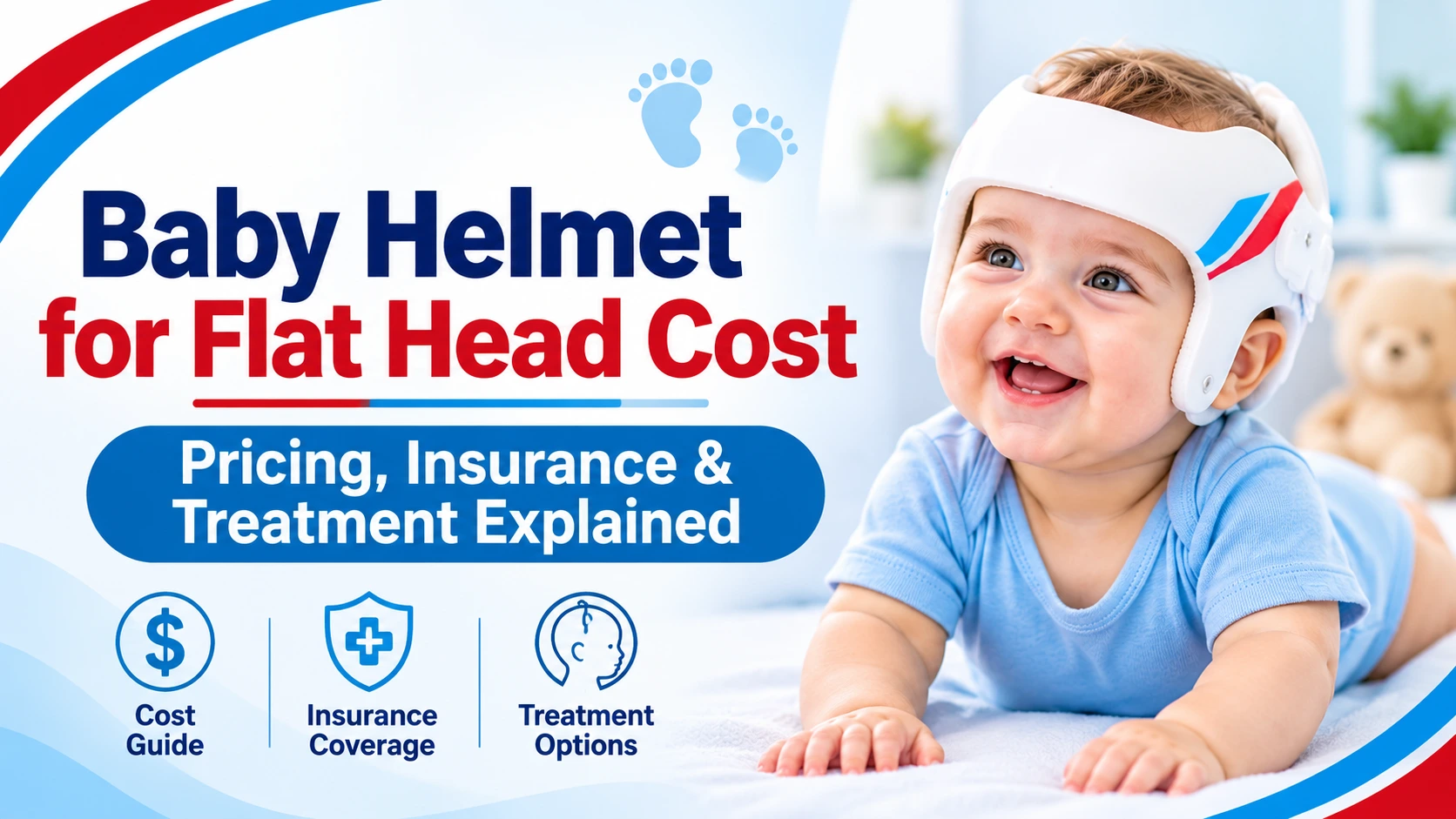
A cranial remolding helmet is a custom-fitted orthotic device designed to help guide the growth of a baby’s head into a more symmetrical shape.
It is typically considered for babies with certain forms of positional head-shape asymmetry. The helmet is designed with carefully shaped areas that accommodate natural head growth while providing guidance around specific regions.
Cranial remolding helmets are sometimes called:
- Baby cranial helmets
- Cranial molding helmets
- Cranial orthoses
- Cranial remolding orthoses
- Cranial shaping helmets
A helmet is not necessary for every baby with a flat spot. The decision to use one depends on a professional assessment of the baby’s head shape, age, growth, and individual needs.
Parents can explore baby cranial helmet services to learn more about the evaluation and treatment process.
What Conditions Can a Cranial Remolding Helmet Help Address?
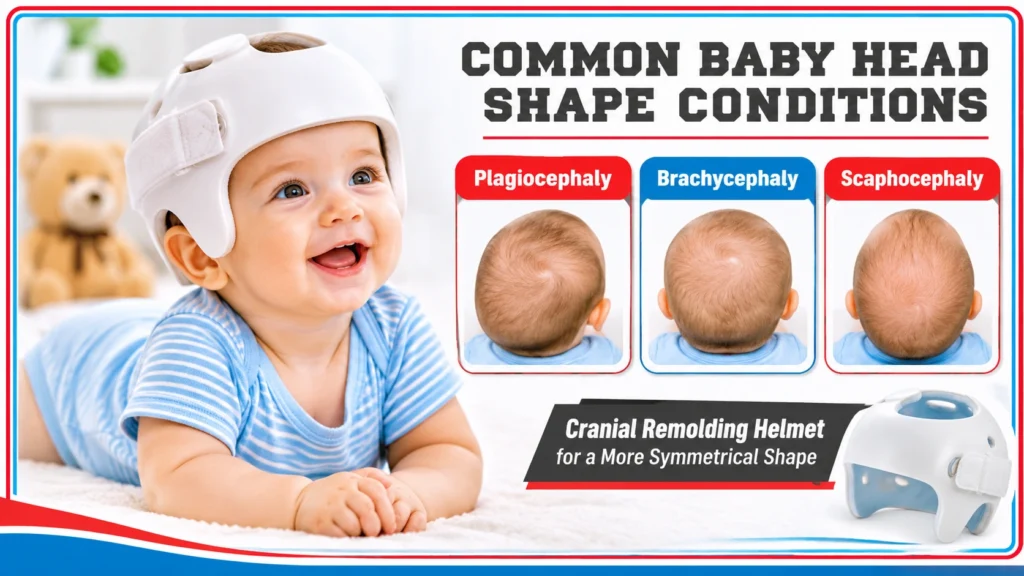
Three terms parents may encounter when researching baby head shape are plagiocephaly, brachycephaly, and scaphocephaly.
Although these conditions can all involve an unusual head shape, they do not look exactly the same.
1. Plagiocephaly – Flatness on One Side of the Head
Plagiocephaly commonly describes an asymmetrical head shape in which one area of the back or side of the head appears flatter than the other.
Parents may notice:
- One side of the back of the head looks flatter.
- One ear appears farther forward than the other.
- The forehead may appear more prominent on one side.
- The head may look uneven when viewed from above.
Positional plagiocephaly can develop when a baby regularly rests their head in the same position.
A healthcare professional can evaluate the head shape and determine whether monitoring, repositioning guidance, physical therapy, or helmet therapy may be appropriate.
2. Brachycephaly – Flatness Across the Back of the Head
Brachycephaly generally refers to a head shape that appears wider and shorter than expected, often with flattening across the back.
Parents may notice:
- A flatter area across the back of the head.
- A wider-looking head shape.
- A higher appearance at the back of the head.
The degree of flattening and the baby’s overall development are important when deciding whether treatment is needed.
3. Scaphocephaly – A Longer, Narrower Head Shape
Scaphocephaly describes a long and narrow head shape.
It is important not to assume that every elongated head shape is positional. Some head-shape differences can have causes that require medical assessment.
If you notice an unusual head shape, consult your baby’s healthcare professional for an appropriate evaluation before considering a cranial remolding helmet.
Families can also explore pediatric orthotic services to understand the broader range of orthotic care available for children.
How Does Cranial Remolding Helmet Therapy Work?
A cranial remolding helmet is individually fitted to the baby’s head.
The helmet is designed to accommodate growth in selected areas while providing guidance around other areas. As the baby’s head grows, the orthosis is intended to support gradual improvement in head-shape symmetry.
The treatment process usually involves several steps:
Step 1: Initial Evaluation
A qualified healthcare professional evaluates your baby’s head shape, medical history, age, and individual needs.
The evaluation helps determine whether helmet therapy is appropriate or whether another approach may be recommended.
Step 2: Head Measurements
If helmet therapy is recommended, measurements or a digital scan may be used to understand the baby’s head shape and support custom fitting.
Step 3: Custom Helmet Fitting
The cranial remolding helmet is fitted to your baby. The fit should be checked by the treating professional to ensure that it is appropriate for the baby’s head and growth.
Step 4: Follow-Up Appointments
Follow-up appointments help the care team monitor fit, comfort, and head-shape progress.
Adjustments may be needed as your baby grows.
Step 5: Treatment Completion
The treating professional determines when helmet therapy should end based on your baby’s growth, head shape, and treatment progress.
Every baby is different, so treatment duration and results cannot be guaranteed.
What Is the Best Cranial Remolding Helmet for Babies?
There is no single cranial remolding helmet that is automatically best for every baby.
The right option depends on your baby’s head shape, clinical needs, fit requirements, growth, and the experience of the treating team.
Rather than choosing a helmet based only on its brand or appearance, parents should consider the following factors.
1. Custom Fit
A cranial helmet should be selected and fitted according to your baby’s individual head shape.
Ask how the provider measures the head and how the helmet fit will be checked throughout treatment.
2. Comfort and Fit Monitoring
Your baby’s comfort and skin condition should be monitored during treatment.
Ask the provider what signs of pressure, irritation, or poor fit you should watch for and whom to contact if you notice a concern.
3. Follow-Up and Adjustments
A helmet is not simply a one-time purchase. Follow-up care is an important part of the process.
Ask how frequently appointments are recommended and how adjustments are handled as your baby grows.
4. Treatment Guidance
Parents should understand how to use and care for the helmet, what the daily routine involves, and when to contact the care team.
Clear instructions and ongoing support can make the experience easier for families.
5. Provider Experience
Choose a provider who evaluates your baby’s individual needs, explains the treatment plan, and offers appropriate follow-up care.
The quality of the evaluation and fitting process matters just as much as the helmet itself.
What About Talee Baby Helmets?
Parents researching cranial remolding helmets may come across the Talee baby helmet and related searches such as Talee cranial helmet, Talee helmet colors, and Talee helmet price.
When comparing a specific helmet brand or model, it is important to look beyond the name.
Ask your provider:
- Is this helmet appropriate for my baby’s specific head shape?
- How is the helmet custom-fitted?
- What follow-up appointments are included?
- Are adjustments included in the treatment plan?
- What colors or design options are currently available?
- What is included in the total treatment cost?
- Who should I contact if I have concerns about fit or skin irritation?
Helmet availability, design options, and pricing may vary by provider and treatment plan. Confirm current details directly with your cranial orthotics provider.
Most importantly, a particular brand should not be considered the best choice for every baby without an individual clinical evaluation.
How Much Does a Cranial Remolding Helmet Cost?
One of the most common questions parents ask is how much a cranial remolding helmet costs.
The total cost can vary depending on factors such as:
- The helmet model and fitting process.
- The complexity of your baby’s needs.
- The number of follow-up visits.
- Whether adjustments are included.
- Insurance coverage and individual plan requirements.
There is no single price that applies to every family.
Before beginning treatment, ask your provider for a clear explanation of the total cost and what is included.
Does Insurance Cover Cranial Remolding Helmets?
Insurance coverage varies by insurance company, policy, and individual circumstances.
Some plans may consider cranial remolding therapy when specific medical criteria are met. Other plans may have coverage limitations or require documentation and prior authorization.
Before starting treatment, contact your insurance provider and ask:
- Is cranial remolding helmet therapy covered under my plan?
- Is a referral required?
- Is prior authorization necessary?
- What documentation is needed?
- Are there specific providers or suppliers I must use?
- What out-of-pocket costs should I expect?
Your provider may be able to help explain the documentation or billing process, but coverage should always be confirmed with your insurance company.
When Should Parents Consider a Cranial Helmet?
If you notice flattening or asymmetry in your baby’s head shape, discuss it with your pediatrician or another qualified healthcare professional.
The appropriate timing for an evaluation depends on your baby’s age, head shape, growth, and clinical circumstances.
Do not wait for a specific age or assume that helmet therapy is necessary. A professional can assess whether monitoring, repositioning guidance, physical therapy, or a cranial remolding helmet should be considered.
Early evaluation can help families understand their options and make informed decisions.
If you have concerns about your baby’s head shape, contact the GOAL Pediatrics care team to discuss an assessment and the appropriate next steps.
Can a Baby’s Flat Head Improve Without a Helmet?
Some cases of positional head flattening may improve as a baby grows, becomes more mobile, and spends less time resting in one position.
A healthcare professional may recommend strategies such as:
- Following safe, supervised tummy-time guidance while your baby is awake.
- Alternating the direction your baby’s head faces during supervised activities.
- Encouraging varied positions during awake time.
- Discussing physical therapy if neck movement or tightness is a concern.
Always place your baby on their back for sleep, following safe-sleep recommendations. Do not use pillows, wedges, or positioning devices in the crib to change head shape.
These strategies are not a substitute for an individual evaluation. If the flattening is significant, persistent, or accompanied by other concerns, ask your baby’s healthcare professional about the next steps.
What Should Parents Expect During Cranial Helmet Treatment?
Starting helmet therapy can bring up many questions. Understanding the process can help parents feel more prepared.
Your provider should explain:
- How the helmet should be worn.
- How to put it on and remove it.
- How to clean and care for it.
- What changes in skin appearance require attention.
- How often follow-up visits are needed.
- How progress will be evaluated.
- Who to contact if the helmet does not seem to fit properly.
Follow the specific wear schedule and care instructions provided by your treating professional. Do not adjust, reshape, or modify the helmet yourself.
If you notice persistent redness, skin irritation, pressure areas, or signs that the helmet is no longer fitting correctly, contact your provider for guidance.
Why Choose GOAL Pediatrics for Cranial Remolding Care?
At GOAL Pediatrics, families can learn about pediatric orthotic care and the cranial remolding process through an individualized approach.
The care process is designed to help families understand each step, from the initial evaluation and measurements to fitting, guidance, and progress checks.
GOAL Pediatrics uses a structured care approach that includes:
- Game Plan Session: Discuss your baby’s needs and understand the recommended next steps.
- Measurements: Gather the information needed to support an appropriate fitting process.
- Gear Fitting: Review the fit of the prescribed orthotic device.
- Coach’s Tips: Receive practical guidance about using and caring for the device.
- Progress Checks: Monitor fit and progress as your baby grows.
- Tune-Ups: Discuss adjustments when needed.
GOAL Pediatrics serves families through locations in Utah, Arizona, Texas, and Idaho. Parents can find a GOAL Pediatrics clinic location and confirm cranial helmet service availability.
Every baby is different. The first step is understanding your baby’s individual needs and whether cranial remolding therapy is appropriate.
Ready to learn more?
GOAL Pediatrics is here to help families understand their options and navigate the cranial remolding care process.
Frequently Asked Questions About Cranial Remolding Helmets
1. What is the best cranial remolding helmet for babies?
There is no universally best helmet for every baby. The appropriate option depends on the baby’s head shape, clinical needs, fit, and the treating professional’s recommendations.
2. What is the difference between plagiocephaly and brachycephaly?
Plagiocephaly generally involves asymmetrical flattening on one side of the head. Brachycephaly generally involves flattening across the back of the head, often resulting in a wider-looking shape.
3. How does a cranial remolding helmet work?
A custom-fitted cranial remolding helmet is designed to accommodate natural head growth while guiding the development of a more symmetrical head shape. Treatment and results vary by baby.
4. When should my baby be evaluated for a cranial helmet?
Ask your pediatrician or qualified healthcare professional if you notice flattening or asymmetry. The appropriate evaluation and treatment timing depend on your baby’s age and individual clinical circumstances.
5. How much does a Talee baby helmet cost?
The price of a Talee helmet or another cranial remolding helmet depends on the provider, treatment plan, fitting process, and included follow-up care. Contact the provider for current pricing and a breakdown of costs.
6. Does insurance cover cranial remolding helmet therapy?
Coverage varies by insurance plan and individual circumstances. Ask your insurance company about eligibility, referrals, prior authorization, documentation, and out-of-pocket costs.
7. Can a baby’s flat head improve naturally?
Some positional flattening may improve as a baby grows and becomes more mobile. However, the right approach depends on the cause and severity of the head-shape difference. Seek professional guidance.
8. Are cranial remolding helmets custom-made?
Cranial remolding helmets are individually fitted to accommodate a baby’s head shape. Ask your provider how measurements, fitting, and follow-up adjustments are handled.
9. How often does a baby need follow-up appointments?
Follow-up frequency depends on the baby’s treatment plan, growth, and fitting needs. Your treating professional will explain the recommended schedule.
10. Are cranial remolding helmets safe for babies?
A cranial remolding helmet should be prescribed, fitted, and monitored by an appropriately qualified professional. Parents should follow the wear and care instructions and contact the provider about skin irritation, pressure areas, or fitting concerns.